Master of Arts in English (M.A.)

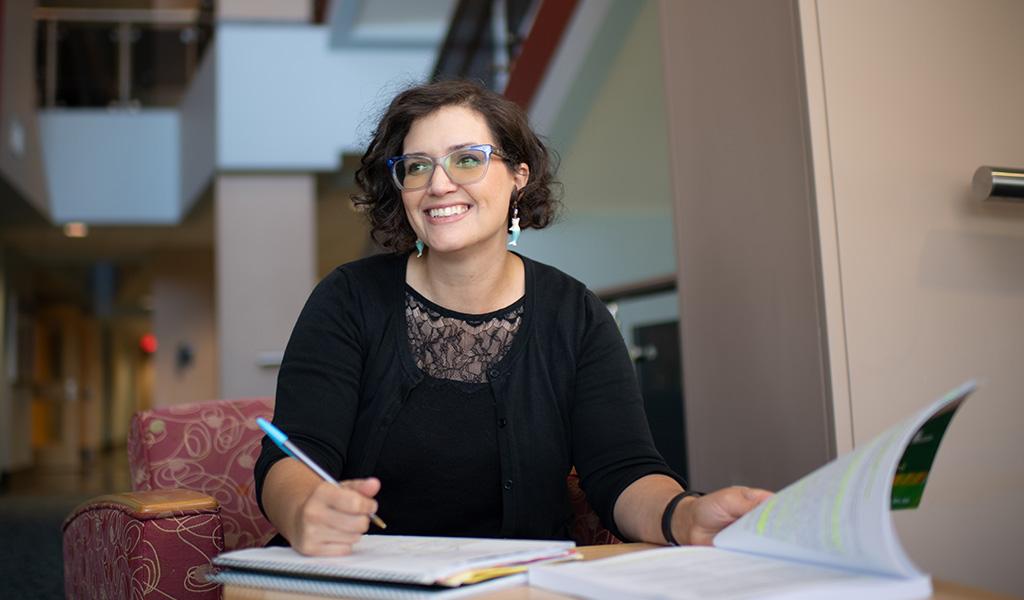
A person turns pages in a book while taking notes.

Immerse Yourself in the Written Word and Become an Expert in English

Take a deep dive into the study and analysis of literature as well as its fascinating history as you earn your master’s in English at Westfield State University. You’ll transform what you discover in the classroom and put it into practice on the job and in your future career. Prepare for advanced studies, level up your current career, or prepare to inspire the next generation as an influential educator. 

Available teaching licensure concentrations:

Initial Licensure 
The M.A. in English with initial license program offers you a path to earn your initial teaching license in middle or secondary English Language Arts. You’ll also take advanced courses in English language, rhetoric, and literature, so you’ll graduate with in-depth expertise in both the pedagogy and subject matter required for successful teaching in English Language Arts. 

Professional Licensure 
This program is designed for students who already hold an initial license in middle or secondary English and leads to the professional license in this field. You will enhance your understanding of educational theory and practices as well as expand your knowledge of English language, rhetoric, and literature. 
Embed

Request Information

Loading...
  • Flexible scheduling with in-person evening classes after 4 p.m.

  • Develop knowledge of literature and its history 

  • Non-licensure and teaching licensure options

Students should choose Westfield State University for its Master of Arts in English program because they can know with certainty that the faculty members that they’re going to be working with care about their development and they are driven to make sure that those students are successful.

Matthew Shand, '17

Set Yourself Up for Success with a Flexible M.A. in English

  • A student prepares to shake a faculty’s hand after receiving a certificate.

    Fits your schedule

    Classes are offered in-person on weekdays during the evening on a full- or part-time basis. Classes are also offered year-round during our Fall, Spring, and Summer semesters, so you can earn your master’s in English when it works best for you.

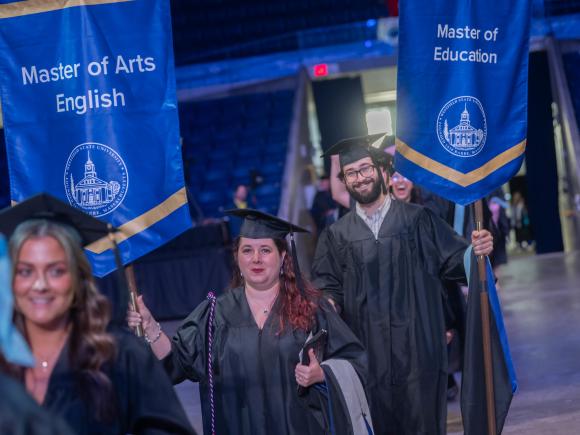
  • English graduate student holding M.A. English flag at commencement.

    Accredited teaching licensure

    Our master’s in English Initial Licensure program is accredited by the NCTE (National Council of Teachers of English). Our Professional Licensure Option is designed to allow English teachers who hold initial licensure to become fully certified according to the educational reforms mandated for Massachusetts by the Board of Education.

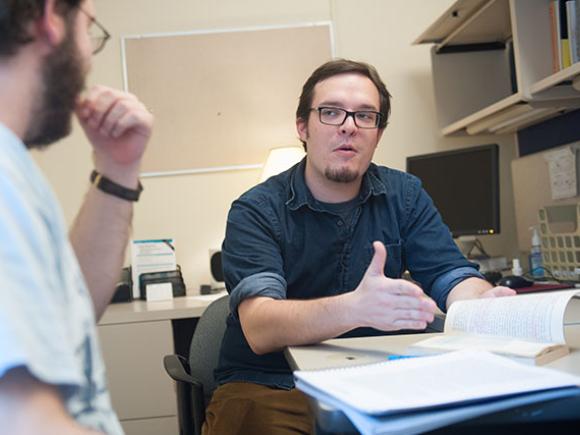
  • A professor sits in their office and explains something from a book to a student sitting across from them.

    Real-world experience

    Gain hands-on experience through a variety of internship opportunities tailored to your professional and personal interests. Apply what you’ve learned in real working environments like libraries, publishers, newspapers, non-profit organizations, businesses, and more.

What Can You Do with a Master’s in English?

Your master’s degree in English will prepare you for advanced graduate studies, pre-professional studies, or a successful career in a wide variety of fields, like:

  • Education 
  • Writing, editing, and publishing 
  • Library and information services
  • Journalism and public relations 
  • Law and government 
  • Arts and entertainment
  • Non-profit organizations
  • Human resources
The 72nd Governor of Massachusetts, Charlie Baker, speaks at a book signing event.

Learn from Expert Faculty in Small Classes

Our faculty members value teaching and have chosen to devote their careers to a teaching-focused institution. They are scholars, published writers, literary historians, and community members. They are also active in their field, presenting their research and serving in leadership positions in scholarly organizations. They draw on this professional work in planning courses that are innovative and reflective of new developments in the field.

Class sizes range from 15 to 25 students, allowing for meaningful one-on-one attention from your instructors as well as collaboration and networking opportunities with your classmates.

Glen Brewster

Dr. Glen Brewster, Program Director

Ready to Learn More?